Tag Archive for 'most common'

Most Common Tests in Drunk Driving Stops

51892724JS002_DUIAlmost every drunk driving stop involves a test designed to show intoxication, or the lack thereof. According to data compiled from clients looking for legal help on LegalMatch.com, the top tests administered in the past 12 months to drivers suspected of drunk driving are as follows:


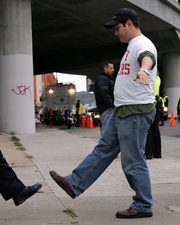
  1. Field sobriety tests (walking a straight line, balancing, reciting the alphabet, etc.): 39%
  2. Breathalyzer or breath test at the scene: 31%
  3. Blood, breath or urine sample at the police station: 25%
  4. I don’t know: 5%

According to these statistics, the vast majority of tests administered are the tests you don’t have to do. Considering how little most people know about their rights this is not surprising.

Blood, breath, or urine samples at the station or local hospital are generally the only tests required in a drunk driving arrest. A small sample of states penalize drivers for failing to perform tests at the scene, but usually no driver can be compelled to do anything until after they are arrested. If the 70% of people who willingly performed tests at the scene knew how rigged these tests were in favor of the police, perhaps they would join the 25% of people who refused to do anything until they were arrested and dragged downtown?

Consider: a professor at Seton Hall made his sober students perform a set of field sobriety tests commonly used in drunk driving stops. (Tests such as walking in a straight line, counting with your fingertips, etc.) He showed a video of these tests to a group of police officers.  They said they would arrest more than half of the students.

Furthermore the National Highway Traffic Safety Administration recognizes only three field sobriety tests as scientifically valid in showing that someone is above a certain blood alcohol limit. (The NHTSA does not actually say these tests show someone is too drunk to drive; only that there is a probability that the person is above a certain blood alcohol level). None of the probabilities for accuracy in these tests rises above 77%.

To muddy the issue further, police officers routinely use other tests not sanctioned as “standardized” by the NHTSA, or render the tests completely useless by flouting the rules for conducting them altogether.

Now don’t take this the wrong way. No one should be looking for ways to get out of a drunk driving charge, and no one should really be getting behind the wheel if they’ve been drinking. On the contrary, people who never get behind the wheel after drinking are the ones who should be extremely cautious about doing field sobriety tests. As the above data shows, sobriety is no guarantee that you will actually “pass” any of these tests.

In sum, there is another maxim people should remember besides the sage advice of “Don’t drink and drive.” If you are sober, don’t perform field sobriety tests!

  • Share/Bookmark

Most Common Injuries in Auto Accidents for 2008

We’ve all heard of people getting into minor fender-benders, hiring an attorney, and suddenly hitting the jackpot.  Some people have even been arrested for purposefully staging car accidents with hopes of making it big. 

My experience has shown: the gold-rush days of auto accident recoveries have long ago passed.  If you get in a car wreck, don’t expect to retire anytime soon.  You’ll likely get some money, but nowhere near an amount you’ll think is fair to make up for all your pain and suffering, inconvenience, and lost time.   

Worse, people with legitimate injuries now must fight for proper compensation from auto insurance companies.  If you get into a car accident, and suffer anything less than a broken bone, prepare for a fight. 

This is bad news for many LegalMatch consumers who have automobile collisions.  I went through and tabulated the most commonly cited injuries they suffered from auto accidents in 2008.  Next to each injury, I cite the percentage of people who cited the ailment when posting their auto accident case on LegalMatch:

  1. Neck pain 49%
  2. Lower back pain 42%
  3. Headaches 39%
  4. Shoulder pain 37%
  5. Upper back pain 34%
  6. Difficulty sleeping 31%
  7. Anxiety 25%
  8. Cuts and bruises 20%
  9. Loss of feeling in part of body 12%
  10. Broken bones 10%

Of the thousands of auto accident cases posted on LegalMatch in 2008, it’s not surprising that the most commonly cited injuries are neck and back pain.  Many people in auto crashes suffer traumatic whiplashes from blunt force impacts, which inevitably lead to neck pain and headaches.  And with any of the ailments noted above, they can make it very difficult for someone to sleep properly.         

The only physical manifestations of an injury noted above are “cuts and bruises”, which 20% of people suffered, and “broken bones”, which 10% of people cited.  The rest of the injuries are not visible injuries that a doctor can see.  This makes it very difficult for insurance companies to determine who is telling the truth and really suffering, and who is trying to milk them for an unmerited windfall.

  • Share/Bookmark