Archive for the 'Government' CategoryPage 2 of 2

Show Me The Money: Federal Court Challenges the Governator

Recently, California Governor Arnold Schwarzenegger revealed that the state needs over $8 billion in spending cuts and additional taxes.  Further, California owes millions to the state prison system, which must make significant improvements to its medical system in order to comply with constitutional standards.  This news comes as a slap in the face to many Californians who are suffering through a dire economic crisis and voted against Proposition 5, a ballot measure which would have allocated money to improve mental health services for prisoners.

In 2006, U.S. District Court Judge Thelton Henderson of San Francisco took control of the California prison medical system after reports indicated severe neglect and incompetence caused about one inmate to die per week.  In order to fix the system, however, money will need to be taken from vital services such as schools, the university, or the police department. 

So far, California has refused to show Judge Henderson the money.  I think California Attorney General Jerry Brown is wise in refusing to turn over more funds to a bureaucracy that has failed to make progress despite spending even more for healthcare than outside healthcare operators.  Brown has asked state and prison officials to draw up specific construction plans which only implement the minimum-needed improvements.  However, the state Legislature has twice rejected bonds which would cover the cost of drafting such plans.   

Although the Ninth U.S. Circuit Court of Appeals granted California a temporary reprieve, eventually the state will need to pay up.  And if Schwarzenegger and State Controller John Chiang are found in contempt, they could face harsh fines-possibly $2 million per day-until they surrender the money.  Hopefully officials can work together to make efficient plans for improvement before even more taxpayer dollars are wasted.

  • Share/Bookmark

The Latest National Security Threat: Whales?

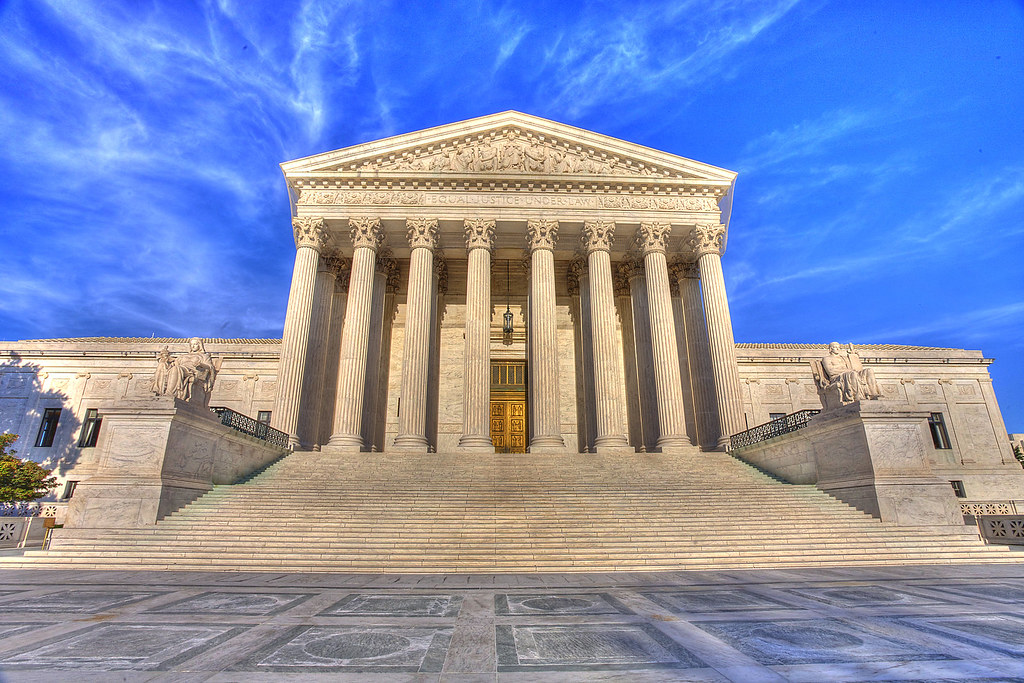
The High Court recently made a narrow reversal of California’s Ninth Circuit regarding Navy sonar training off the Southern California Coast. The order partially overturns a California Appeals Court ruling that the Navy had to temporarily stop using its active sonar in training exercises. Concerns over harm to marine life led the group and others to sue the Navy in 2007 over the use of the technology.

The case can be claimed by both sides as a victory. The plaintiff, the National Resources Defense Council, hails the verdict as not upending the underlying ruling that the Navy most likely failed to follow federal law. In fact, 4 of the lower court’s 6 mitigating measures imposed upon the Navy were left in place.

Nonetheless, lost in the case’s arguments about irreparable harm, probability of success on the merits, and other highfalutin lawyer talk was much discussion of the physical damage to marine life caused by mid-frequency sonar. Instead, Chief Justice Roberts starkly framed this as an issue of National Security vs. whale watching. The holding gave total deference to Navy concerns with National Security. They do, after all, need to train themselves on how to use their fancy toys in order to protect America and our coastlines.

But does deference to the Navy cross the line when we are talking about the scientific impacts of sonar on marine life? Mid frequency sonar (the type of sonar at issue) can seem as loud as 2,000 jet engines to animals such as whales and dolphins. Extremely loud sonar can rupture marine mammal ear drums, cause brain hemorrhaging, and make them temporarily deaf. For many of these animals these problems lead to death, either by fatally causing them to surface too quickly or causing them to beach on the shore. By the Navy’s own estimate, the tests may permanently injure (i.e. kill) almost 600 animals, affect the behavior of 170,000 animals, and cause temporary deafness to 8,000. 

Considering that many of the marine mammals off of Southern California are on the endangered list (such as the beaked whale), numbers in the hundreds could permanently endanger the survival of a species. This wasn’t really discussed in the holding of the case. After all, equity is primarily a decision of fairness amongst human-beings, not animals.

Considering the original position of the Navy was that they can do whatever they want, the fact that the majority of the injunction was left untouched is impressive. In fact, the Navy didn’t even challenge 4 of the 6 measures imposed on it by the lower court. In its holding and its argument the case seems to be practical in scope. Hopefully these mitigating measures are sufficient and do not cause irreparable harm to native California marine life. Although whale watching might not trump national security, we definitely need to have some whales around for when their friends show up.

  • Share/Bookmark

The Biggest News You Haven’t Heard About All Day

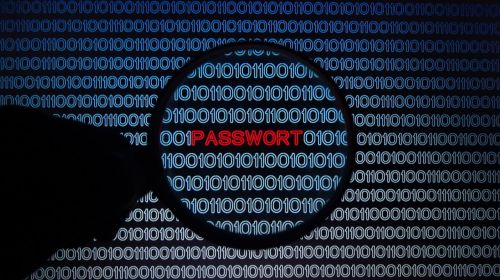
Instead of voting in the next election, why not just put your USB into a voting machine and upload your preferred results? If you live in a state that uses Sequoia Voting System technology, this is not a joke. This can actually happen.

In 2004, the Rutgers Law School Constitutional Litigation Clinic filed a lawsuit against the State seeking de-certification of 10,000 Sequoia AVC machines in New Jersey. It has taken 4 years of discovery and pre-trial litigation for a report to finally be released detailing numerous security flaws in Sequoia’s machines. Unfortunately, the case will not be resolved until sometime after the presidential election.

Computer Science experts analyzing New Jersey’s Sequoia DRE (direct recording electronic) voting machines discovered that voters and election officials alike had the ability to alter votes without leaving behind any evidence of tampering. Votes could be manipulated by physically opening the machines or bypassing unsophisticated security measures on the computers used to count and calibrate them. You can read their report (In a disturbing turn, experts on Sequoia voting machines were recently denied when they asked for permission to view votes being read from the machines this election.)

The voting machines were so easily tampered with that the Judge wanted guards posted at centers where machines were kept before the election, a request denied by the state. Amazingly, New Jersey’s Sequoia voting machines do not even leave a paper trail, which may eliminate several of these security flaws. New Jersey is one of a handful of states using touch screen voting machines that do not print hard copies of every voter’s choices, meaning there is nothing to examine if something goes awry.

How easily can something go awry? According to a report by Computer Science Professors at the University of California Santa Barbara, all it takes is a paperclip or a USB drive. In fact, this is not the first time Sequoia or other DRE machines have been criticized. In 2007, California ordered a full-scale review of every electronic voting system used in the state, which led to sweeping security measures and even decertification of some machines, including those made by Sequoia. Ohio conducted a similar review of its electronic voting systems. The report found all the voting machines currently in use suspect and also recommended their de-certification.

Tampering with votes on DRE machines generally requires surreptitious access to the machines, or one unscrupulous election official. You might be thinking: what else is new? However, these machines were heralded as the new weapon in the fight against election fraud. Billions of dollars was spent on buying the machines, setting them up, and training election officials in their use.

What are we left with after this substantial investment? In some states, an unreliable voting system where there is no guarantee that your vote will be accurately counted. Although no system is perfect, the least we can do is try and move forward, not backward.

  • Share/Bookmark